Microsoft Dynamics 365 Services for Connected ERP, CRM, and Business Operations
Your business runs on forms. New customer applications. New patient intake. New hire paperwork. Field service work orders. Site inspections. PTO requests. Expense reports. Compliance acknowledgments. Vendor onboarding. Every one of them produces a paper sheet or a filled-in PDF that has to be scanned, emailed, filed, and re-keyed into the system where the data needs to live. The handwriting is illegible. The fields are blank. The PDF didn’t save. The form is wrong because somebody used last year’s version.
Kelley Create’s Digital Forms services replace paper and PDF forms with mobile-first digital forms that produce clean structured data at the moment of capture. Field workers complete forms on phones and tablets. Customers fill out applications on the web. Patients complete intake on a kiosk or their own phone. Data flows directly into your ERP, CRM, EMR, or HRIS. One partner. One forms platform. One end to clipboard runs.

we "checked" it for you


what worked then may not work now
When the CRM and the ERP Don’t Talk, the Customer Notices.
When the CRM and the ERP don’t talk, the customer notices. Sales promises a delivery date the operations system can’t honor. Service answers a call without seeing the open invoice. The customer asks for status and gets passed to three different people because nobody has the whole picture. Renewal conversations happen too late because nobody saw the warning signs.
The right partner doesn’t add more dashboards on top of disconnected systems. They deploy Dynamics 365 so the customer record is one record across sales, service, operations, and finance. That’s us.
What Is Microsoft Dynamics 365?
Microsoft Dynamics 365 is Microsoft’s business platform: a connected suite of applications covering ERP (Finance, Supply Chain, Project Operations, Commerce) and CRM (Sales, Customer Service, Marketing, Field Service) on shared data. Built on Microsoft Dataverse. Native integration with Microsoft 365 (Outlook, Teams, Excel, SharePoint). Extended through Power Platform (Power Apps, Power Automate, Power BI, Power Pages). AI capabilities through Copilot across every application.
Dynamics 365 comes in two ERP product families: Business Central (purpose-built for mid-market organizations, faster to deploy, less complex) and Finance & Operations (for larger and more complex enterprise environments). The CRM applications (Sales, Customer Service, Marketing, Field Service) work with both ERP families and stand on their own.






























Find Out Whether Dynamics 365 is the Right Answer For Where Your Business is Going. Free Strategy Session With Honest Scoping.

talk to our creators
How Kelley Create Delivers Microsoft Dynamics 365
Four phases. Strategic discovery, right-sized scoping, phased deployment, then ongoing optimization.
Current state assessment. Business process mapping. Integration point identification. Change management readiness. The discovery work that determines implementation success before any configuration starts.
Right-sized implementation. We’re honest about what Dynamics 365 can and can’t do, and willing to tell you when the right answer is less than what you walked in asking for. Business Central vs F&O recommendation based on actual complexity.
Phased deployment with measurable milestones. Configuration, integration, data migration, testing, training, cutover. Quick wins early to build adoption.
Ongoing managed services. Quarterly business reviews. Continuous improvement. Platform expansion as the business proves out.
Dynamics 365 Applications We Implement
Most engagements involve multiple applications integrated together.

these components are standard
-
Mid-market ERP. Finance, supply chain, light manufacturing, inventory, sales/purchasing, project accounting. Faster deployment, less complexity than F&O.
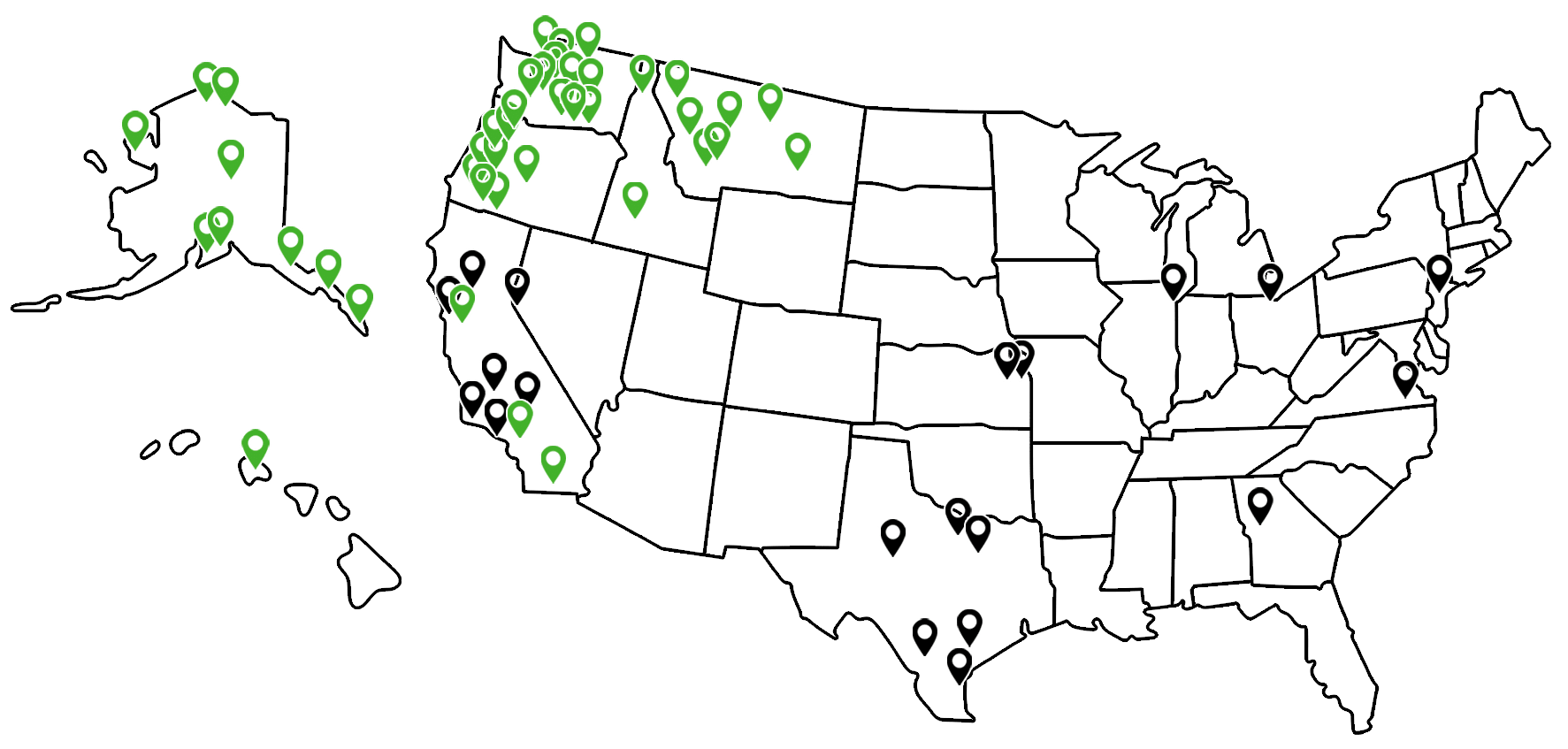
Local Expertise, National Reach
Dynamics 365 implementation is hands-on. Discovery, training, change management, cutover support happen locally.
Local. Regional implementation teams for on-site discovery, key milestones, training. People who learn your business.
National. Multi-location organizations get coordinated implementation across every site. Same configuration approach, same training methodology, same go-live cadence.
Why Partners Choose Kelley Create for Dynamics 365
Dynamics 365 specialists across the application family.
Business Central, Finance & Operations, Sales, Customer Service. The architect scoping your project has done dozens of implementations and knows which path fits. Business Central versus F&O is a real recommendation, not a default.
Right-sized scoping.
Honest about what Dynamics can and can’t do. The smallest implementation that solves the actual problem, not the biggest one that fits the SOW template.
Business Central and F&O depth.
Both ERP families. We make honest recommendations based on actual operational complexity.
Connected with Microsoft 365 and Power Platform.
We deliver Dynamics as part of the broader Microsoft ecosystem. Copilot, Power Platform, Microsoft 365 integration all coordinated.
Multi-location playbook.
Restaurant chains, healthcare networks, retail operations. Coordinated Dynamics rollouts across many locations is something we do regularly.
Change management as a deliverable.
Most Dynamics failures are change management failures. Training, communication, adoption tracking built in from the start.
Custom development depth.
When standard Dynamics doesn’t cover the gap, we extend through Power Platform or custom development. The full stack from one partner.
Who Dynamics 365 Is For
Growing companies on QuickBooks or older legacy ERP needing the next platform up. Business Central is one of the most common landing spots.
Multi-location operations needing connected ERP and CRM across many sites with centralized reporting.
Companies with disconnected sales and service where customer experience suffers because the systems don’t share context.
Organizations with complex operational requirements (multi-entity, multi-currency, advanced supply chain) that need Finance & Operations.
Microsoft-aligned IT shops where Microsoft 365 is already the productivity platform and Dynamics is the natural business platform extension.
Companies recovering from failed implementations ready for honest scoping and methodical execution.
Case Studies: AI & Intelligent Solutions
Real businesses. Real Outcomes. Click to view all Case Studies.









Right-Sized Scope. Copilot Enablement Included. Change Management as a Deliverable.
click here to get started
Ready to Connect the Business?
The account manager’s lost $400K renewal isn’t the account manager problem. It’s a connected-business problem. Disconnected sales, service, finance, and operations cost real money. The fix isn’t more weekly meetings. It’s Dynamics 365 implemented properly, scoped honestly, and supported over time. One connected business platform instead of five disconnected tools.
Free Dynamics 365 strategy session. We map your current state, recommend Business Central or F&O honestly, and produce a realistic implementation roadmap with right-sized scope and honest timelines.

Frequently Asked Questions
-
Business Central or Finance & Operations? How do we decide?
Business Central fits most mid-market organizations (typically up to a few hundred million in revenue, more transactional than complex). Finance & Operations fits larger and more complex enterprise environments. The decision is based on operational complexity (multi-entity, multi-currency, complex supply chain, advanced manufacturing), not revenue tier. The strategy session recommends one based on what your business actually does.
-
How long does a Dynamics 365 implementation take?
-
Can you migrate from QuickBooks?
-
What about implementation risk?
-
How does Copilot in Dynamics work?
-
Can we extend Dynamics with Power Platform?
-
What about integration with our existing systems?
-
Can you handle multi-entity consolidation?
-
What about industry-specific functionality?
-
What's the ongoing cost after implementation?
-
Can you work alongside our internal team?
-
What if our current ERP project failed and we need to recover?